Supporting families across the UK
Gentle, early support that understands your child and supports you too.
When your child is very young, it can be hard to know whether what you’re seeing is just part of growing up, or something that needs a closer look. Every toddler has meltdowns. Every preschooler resists bedtime occasionally. So when should you actually be concerned, and where do you even start?
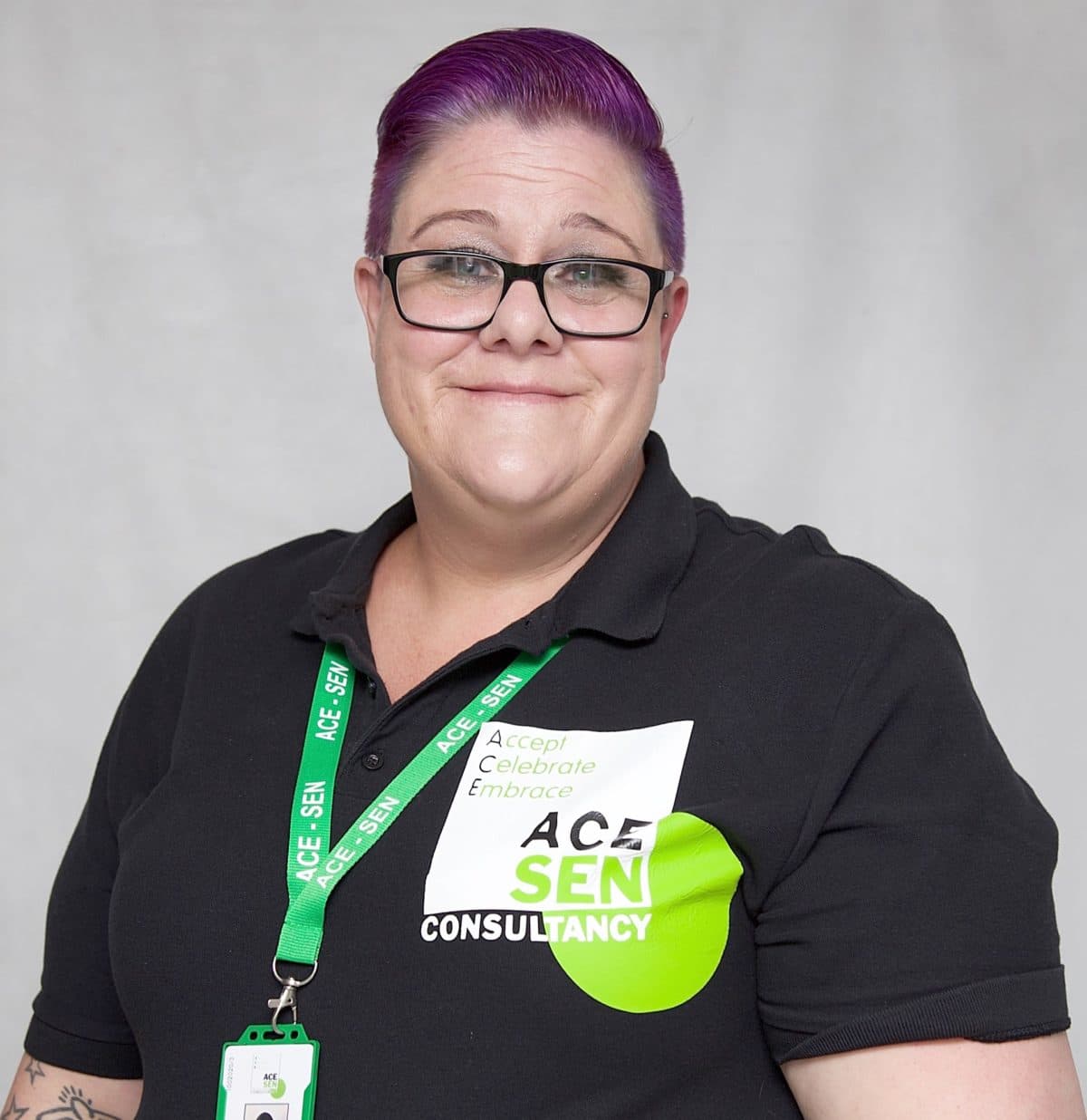
Terrie Ludbrook, ACE-SEN’s Early Years SEND Consultant, works with families of children aged 0 to 5 to answer exactly that question. Through home-based observations, sensory and communication profiling, and calm, practical guidance, Terrie helps you understand what’s happening beneath the surface, so you can support your child with confidence rather than guesswork.
Sessions run in person and over Zoom, so it doesn’t matter where you are in the UK.
Terrie Ludbrook · Early Years SEND Consultant
Terrie is ACE-SEN’s Early Years SEND Consultant, specialising in supporting children aged 0 to 5 and the families and settings around them. She works alongside parents, carers, nurseries, preschools and childminders to build a clear, evidenced picture of a young child’s needs, then turns that picture into practical strategies everyone around the child can use.
Read more about Terrie and the rest of the team on our Meet the Team page.
Every child develops at their own pace, so a single wobble is rarely a cause for concern. What tends to be worth a closer look is a pattern, especially when it’s showing up in more than one setting (at home and at nursery, say). Families often come to Terrie when they’ve noticed things like:
Speech and communication developing more slowly than expected, or not developing at all
Strong reactions to everyday sounds, textures, lights or smells that other children don’t seem to notice
Intense distress around transitions, changes in routine, or being told what to do, even for small, everyday requests
Limited eye contact, or social engagement that looks different from other children the same age
A need for things to happen in exactly the same way, every time, with big reactions when they don’t
Frequent meltdowns that seem out of proportion to what triggered them, or that are hard to predict
Nursery or preschool staff raising concerns, or your child struggling to settle in a group setting
None of these signs is a diagnosis on their own, and plenty of children show some of them without going on to need formal support. But if several of them sound familiar, or professionals around your child have started using words like “referral” or “assessment”, it’s worth understanding your options early rather than waiting to see if things resolve on their own.
If what you’re describing sounds like your child needs things to happen entirely on their own terms, with real anxiety underneath the resistance, it may be worth reading our guide to the early signs of PDA, a profile of autism where everyday demands can feel genuinely threatening. Our explainer on what PDA is and why traditional behaviour strategies may not work for PDA covers this in more depth, and our dedicated PDA Support service sits alongside early years support for families who need both.
Support is built around your child and your family, not a fixed programme. Depending on what you need, this can include:
A clear, honest look at what’s going on for your child right now, drawing together what you’re seeing at home with what nursery or other professionals are seeing elsewhere.
We visit your child in the environment they know best, watching how they play, communicate and respond to the world around them, without the pressure of a clinical setting.
A detailed look at how your child processes sound, touch, light and movement, and how they’re communicating, whether that’s through words, gestures, behaviour or something else entirely.
Practical help understanding what your child’s behaviour is telling you. A meltdown, a refusal or a shutdown is rarely “just naughtiness”, it’s usually a signal, and once you can read it, you can respond to the cause rather than the symptom.
Down-to-earth, workable strategies for the moments that are hardest at home, from mealtimes and getting dressed to bedtime and public meltdowns, built around your child rather than a generic checklist.
We work directly with nurseries, preschools and childminders too, helping staff understand your child’s needs and put reasonable, practical adjustments in place, so support is consistent wherever your child spends their day.
If your child’s needs turn out to be significant, you may hear the term EHCP, an Education, Health and Care Plan. Our guide to what an EHCP actually is explains it in full, but the short version for families of very young children is this: an EHCP can be requested and issued from birth, there’s no minimum age, and there’s no requirement for your child to have a formal diagnosis first. What matters is whether your child’s needs look likely to be more than a nursery or school can reasonably meet from its own resources.
You, a health visitor, a nursery or a GP can all ask the local authority for an EHC needs assessment. Our step-by-step guide to the EHCP application process walks through exactly how to request one, what the legal deadlines are, and what evidence carries the most weight, evidence that Terrie’s early years observations and written reports are specifically designed to provide.
Plans for very young children are also reviewed more often than the usual yearly cycle, since so much changes in a short space of time before school age. If your child already has a plan, our guide on preparing for an EHCP annual review covers how to make sure it still reflects who your child is today.
The system itself is also changing. The government’s 2026 Schools White Paper is introducing reforms to how EHCPs and early years SEND support work, though existing legal protections are not due to change before September 2030. If you’re unsure what any of this means for your own child, that’s exactly the kind of question Terrie and the team can help you work through.
For hands-on help requesting an assessment, reviewing a draft plan, or gathering the evidence a local authority will actually accept, our EHCP Support service works alongside early years support at every stage.
Early years support isn’t just for parents and carers. If you’re a professional supporting a family rather than a parent yourself, you’re just as welcome to get in touch. Terrie also works with:
Most families start with a free 30-minute consultation over Zoom, just a relaxed conversation about your child and what’s been happening, with no obligation to book anything further. From there, next steps might include a home or nursery visit, a written observation report, or an ongoing programme of coaching, depending entirely on what would actually help. Terrie can also provide the written, professional evidence you need to seek a diagnosis and/or apply for an Education, Health and Care Plan, evidence built from real observation of your child, not a generic template.
Book my free virtual consultationNo obligation, just a friendly chat over Zoom about your child and how Terriecan help. Wherever you are, we’re only a video call away.
No. Support is available whether or not your child has, or is seeking, a diagnosis. In fact, Terrie’s observations and reports are often exactly what’s needed to move a diagnosis or an EHCP application forward.
It can. There’s no minimum age and no diagnosis requirement for an EHC needs assessment, so a plan is genuinely possible from a very young age if your child’s needs warrant it. Terrie’s written evidence, combined with our EHCP Support service, gives you the best possible starting point.
SEND support is what a nursery or preschool provides from its own resources, usually agreed with you and the setting’s early years SENCO. An EHCP is a legal document issued by the local authority, and it’s only needed when a child’s needs look likely to be more than a setting can reasonably meet alone. Most young children start with SEND support, and only some go on to need an EHCP.
An early years SENCO (Special Educational Needs Coordinator) is the member of staff at a nursery, preschool or childminder responsible for coordinating SEND support day-to-day. Terrie works alongside your setting’s SENCO rather than in place of it, adding an outside, in-depth perspective and written evidence a busy setting doesn’t always have time to produce.
Every child is different, but early signs often include limited eye contact, little response to their name, delayed or absent speech, and a strong need for routines to stay exactly the same, much like the pattern described above. Several of these signs together, especially across more than one setting, are worth exploring with Terrie rather than waiting to see if things resolve on their own.