Supporting families across the UK
Clear answers, compassionate guidance, and a deeper understanding of how your child learns.
If reading, spelling or writing feel like a daily battle for your child, a dyslexia assessment can tell you why and what to do about it. Our Level 7 dyslexia assessment is a calm, child-centred evaluation led by Nicola Durrant, giving you a clear, detailed report and a practical plan for home and school, not just a label.
A dyslexia assessment is a formal evaluation of how your child processes written language: how they read, spell and hold information in working memory, measured against what’s typical for their age. Dyslexia is a specific learning difficulty that mainly affects reading, spelling and writing, and it looks different in every child, so a good assessment builds a picture of their particular strengths and challenges rather than working from a generic checklist.
This is different from a broader educational psychologist assessment, which looks at how a child thinks, learns and copes at school across many areas, including anxiety, autism or ADHD. A dyslexia assessment is a separate, more focused evaluation, best suited to families who already suspect a specific learning difficulty with reading, spelling or writing.
Many families come to us after noticing a pattern of struggle at home or in class (our guide to the early signs of dyslexia covers what to look for). Others are asked to arrange one as part of gathering evidence for an EHCP.
Every child is different, and one sign on its own rarely means much. It’s a pattern that persists over weeks and months, especially alongside clear strengths elsewhere, that’s worth exploring further. Common signs parents and teachers notice include:
Reading that stays slow, effortful or inaccurate despite regular practice
Spelling the same word several different ways within one piece of writing
Muddling the order of letters or numbers, or confusing similar-looking letters
Avoiding reading aloud, or tiring quickly during reading and writing tasks
A noticeable gap between what your child can say aloud and what they can put on paper
Difficulty following multi-step instructions or remembering sequences
A drop in confidence or self-esteem around schoolwork
For a full breakdown by age and area, including a look at how dyslexia affects confidence as well as reading, read our guide: How to Spot the Early Signs of Dyslexia in Primary School Children.
We start with a free 30-minute consultation over Zoom, a friendly chat about your child, what you’ve noticed, and what to expect, so there are no surprises on the day.
A comprehensive, one-to-one evaluation covering:
Sessions are run at a calm, child-centred pace, designed to put your child at ease rather than feel like a test.
You receive a clear, detailed written report that explains the results in plain language, confirms a diagnosis where the criteria are met, and sets out practical strategies tailored to how your child learns, for use at home and shared with their school. We’re on hand afterwards to talk through what the report means and what to do next.
Our dyslexia assessment is designed for children aged 7 to 11. It gives you a diagnosis where the criteria are met, along with a report written for home and school use, so it isn’t suitable for higher education access arrangements.
If you’re supporting a wider range of needs alongside dyslexia, or your child’s needs go beyond a single assessment, our support for children aged 5 and beyond covers the fuller picture, including working with schools, EHCP guidance and emotional wellbeing during transitions.
Includes the full assessment session, scoring, analysis, and a detailed written report.
Nicola Durrant · Founder & Level 7 Dyslexia Assessor
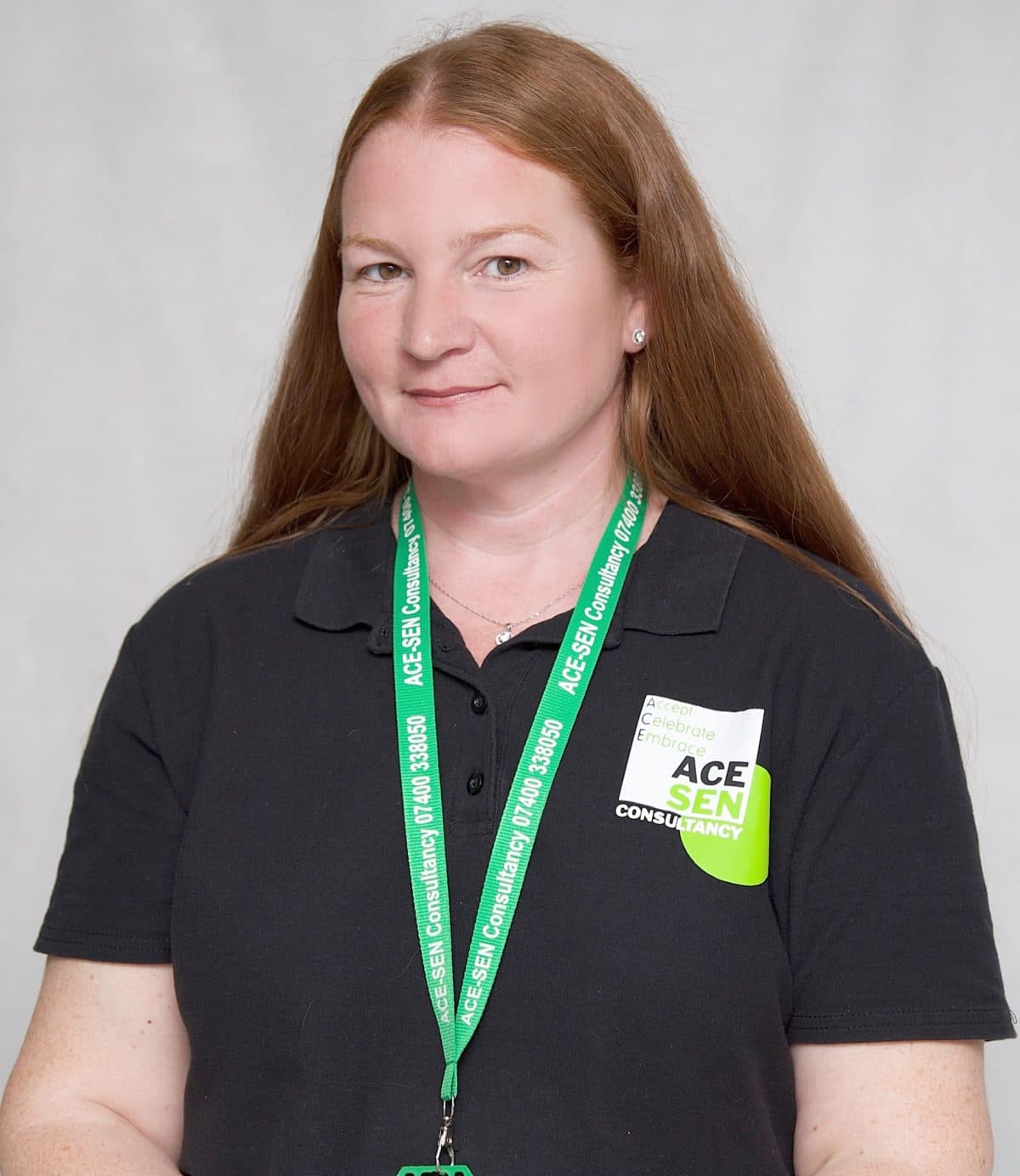
Your child’s assessment is carried out by Nicola Durrant, ACE-SEN’s founder and Level 7 Dyslexia Assessor, with over 25 years’ experience supporting neurodivergent children and young people. Nicola brings a calm, relational approach to every session, along with lived experience as a parent, so your child is met with patience and understanding, not pressure.
Once you have your child’s report, targeted dyslexia tuition can help them build reading, spelling and confidence at their own pace, using gentle, multi-sensory methods designed around how they learn best, not a one-size-fits-all approach.
If the assessment forms part of a wider EHCP application or annual review, we’ll support you through that process too; see EHCP support for how we help.
No obligation, just a friendly chat about your child and how we can help.
The NHS does not carry out formal dyslexia diagnoses, though your child’s school or GP can start the process. A private assessment with us avoids school waiting lists and gives you a full diagnostic report within weeks.
Schools can carry out initial screening through the SENCo, but a full diagnostic report usually needs a specialist or educational psychologist assessment, which is faster and gives a more detailed picture than school screening alone.
Common signs include reading that stays slow or effortful, inconsistent spelling of the same word, letter reversals, and a gap between what a child can say aloud and what they can put on paper. Our guide to the early signs of dyslexia covers this in more depth.